
BIS Hallmarking Certification
BIS Hallmarking registration and support for jewellers in India — purity certification, assaying centre coordination, and BIS compliance from Chanakya QMS.
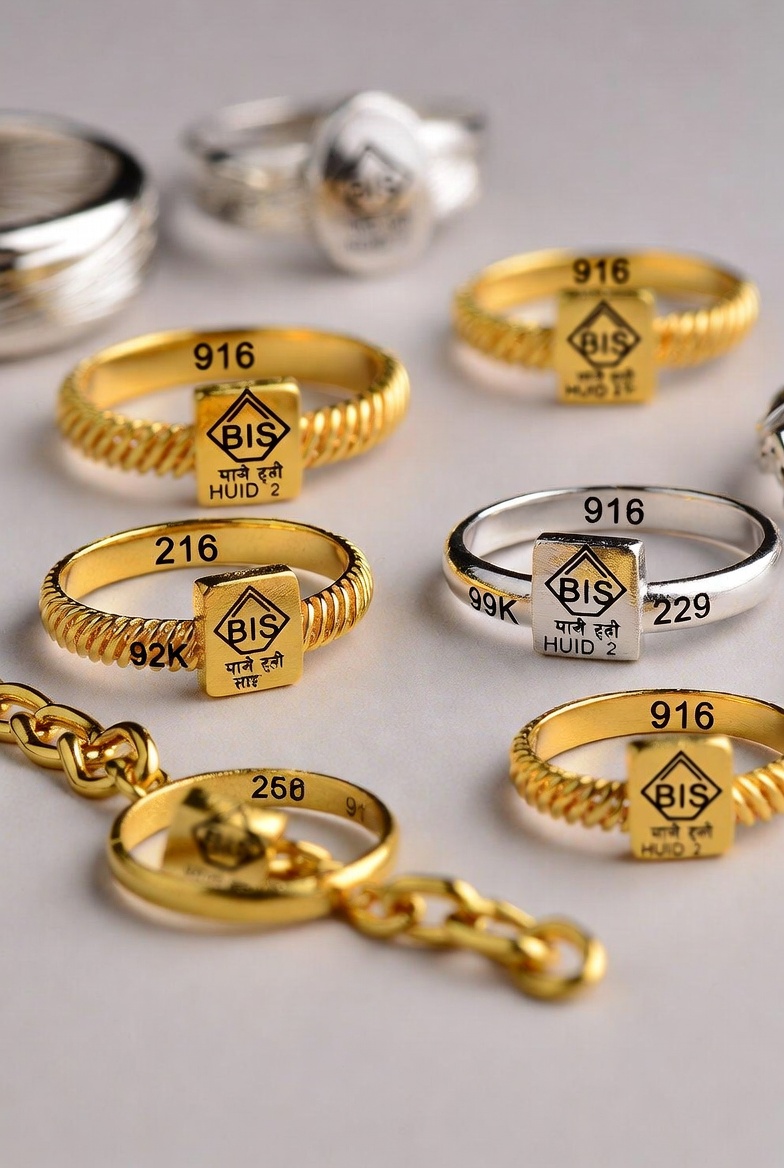
BIS Hallmarking is the government-mandated purity certification for gold and silver jewellery sold in India. If you run a jewellery showroom, manufacturing unit, or wholesale business, you legally cannot sell gold or silver jewellery in India without registering under this scheme and getting each piece hallmarked at a BIS-recognised Assaying and Hallmarking Centre (AHC).
The scheme is run by the Bureau of Indian Standards and exists for one straightforward reason: before mandatory hallmarking, a meaningful share of jewellery sold in India didn't actually match its claimed purity. The hallmark — that small stamp with the BIS logo, purity grade, and a unique HUID (Hallmark Unique ID) number — is the government's answer to that, and it's now compulsory for 14, 18, 20, 22, 23 and 24 karat gold jewellery and for silver articles in most parts of the country.
Who Needs Hallmark Registration
Any jeweller — whether you run a single showroom, a chain, or a manufacturing unit supplying to retailers — needs to register with BIS before selling hallmarked gold or silver jewellery. This includes manufacturers, wholesalers, and retailers alike; registration is tied to the business entity and premises, not to the brand name alone, so each showroom location typically needs its own registration.
Eligibility — Who Can Apply
Any registered business entity (proprietorship, partnership, or company) with a jewellery showroom or manufacturing premises in India can apply. You'll need a valid GST registration and a physical business address — BIS does not grant hallmark registration to an entity operating without a fixed, verifiable premises, since the registration is location-specific.
BIS Hallmarking Process — Step by Step
1. Confirm your registration category
Jewellers register as either a manufacturer or a retailer (or both, if applicable) — this determines which parts of the application apply to you.
2. Apply through the BIS portal
The registration application goes in online through BIS's dedicated jeweller registration portal, along with business documents and the prescribed fee.
3. Document verification
BIS reviews your business registration, GST certificate, and premises proof before granting registration.
4. Receive your BIS registration certificate
Once approved, you get a registration certificate and a unique registration number — this is what allows you to legally sell hallmarked jewellery, separate from the hallmarking of individual pieces.
5. Send jewellery for assaying and hallmarking
Each piece (or batch) is sent to a BIS-recognised Assaying and Hallmarking Centre for purity testing, typically using X-Ray Fluorescence (XRF) for a quick screen and Fire Assay for precise verification on a sample basis.
6. HUID generation
Every piece that passes gets a unique Hallmark Unique ID (HUID) — a six-character alphanumeric code — engraved or stamped on it along with the BIS mark and purity grade.
7. Record-keeping for surveillance
BIS conducts periodic surveillance checks on registered jewellers, so keeping clean records of what was sent for hallmarking and when matters for ongoing compliance, not just the initial registration.
Documents Required
- GST registration certificate for the business entity.
- Business registration proof — partnership deed, incorporation certificate, or proprietorship declaration.
- Identity proof of the owner(s) or authorised signatory (Aadhaar or PAN).
- Premises proof — rent agreement or ownership document for the showroom or manufacturing unit.
- Photographs of the premises, showing the shop front and interior.
How Assaying and Hallmarking Actually Works
Most people assume hallmarking is just a stamp, but there's real testing behind it. At the AHC, jewellery first goes through an XRF scan, which gives a fast, non-destructive purity reading — good for screening but not precise enough to be the final word. A sample of pieces then goes through Fire Assay, a more exacting (and slightly destructive) chemical test that's treated as the authoritative result if there's any discrepancy. Only pieces that pass get the HUID and hallmark applied; pieces that fail are returned to the jeweller rather than hallmarked.
How Long Does Hallmark Registration Take?
Jeweller registration itself (the business-level approval) usually takes 2 to 4 weeks once documents are complete. Getting individual jewellery pieces hallmarked at an AHC is much faster — often same-day or within a few days per batch, depending on the centre's queue. The registration is the one-time setup; hallmarking of stock is an ongoing, recurring process for every new piece you sell.
Cost Factors
Costs break into two parts: the one-time BIS registration fee for the business (varies by applicant category), and the per-piece hallmarking charge paid to the AHC each time jewellery is sent for testing, which depends on the centre and the number of pieces in a batch. There's no single flat number here since hallmarking is a recurring operational cost, not a one-off certification fee.
Common Mistakes That Cause Delays or Compliance Issues
The patterns we see most often: jewellers assuming one registration covers multiple showroom locations when each premises typically needs separate registration; selling old, un-hallmarked stock past compliance deadlines without a clear clearance plan; sending pieces to an AHC that isn't actually BIS-recognised for the applicable category; and not maintaining a record of which HUIDs correspond to which stock, which becomes a problem during a BIS surveillance check.
Benefits of BIS Hallmark Registration
Beyond the legal requirement, hallmarking is what lets customers trust a purity claim without taking your word for it — the HUID is traceable, which matters increasingly to buyers who've seen purity disputes in the news. It also protects you as a seller: a properly hallmarked piece with documented testing is your defence if a purity dispute ever comes up later, and it keeps you eligible to sell through larger retail chains and e-commerce platforms, many of which now require hallmarked stock only.
Frequently Asked Questions
Is BIS hallmarking mandatory for all jewellery in India?
Yes, for gold jewellery of 14, 18, 20, 22, 23 and 24 karat purity, and for silver articles in most regions, hallmarking is compulsory before sale. Check current BIS notifications for your specific product category and location.
How long does BIS jeweller registration take?
The business-level registration typically takes 2 to 4 weeks once documents are complete. Hallmarking of individual jewellery pieces at an Assaying and Hallmarking Centre is much faster, often same-day or within a few days per batch.
Does each showroom need a separate hallmark registration?
Generally yes — registration is tied to the specific business premises, so a jeweller with multiple showroom locations typically needs to register each one separately.
What is a HUID number?
HUID stands for Hallmark Unique ID — a six-character alphanumeric code assigned to each piece of jewellery that passes assaying, engraved or stamped on it along with the BIS mark and purity grade, making it individually traceable.
What testing methods are used for hallmarking?
X-Ray Fluorescence (XRF) gives a fast initial purity reading, and Fire Assay — a more precise chemical test — is used on a sample basis as the authoritative result if there's any discrepancy.
What documents are needed for BIS jeweller registration?
GST registration, business registration proof, identity proof of the owner or authorised signatory, premises proof, and photographs of the showroom or manufacturing unit.