CDSCO Certification
CDSCO registration and licensing for medical devices, drugs and cosmetics in India — classification, documentation and SUGAM portal filing from Chanakya QMS.
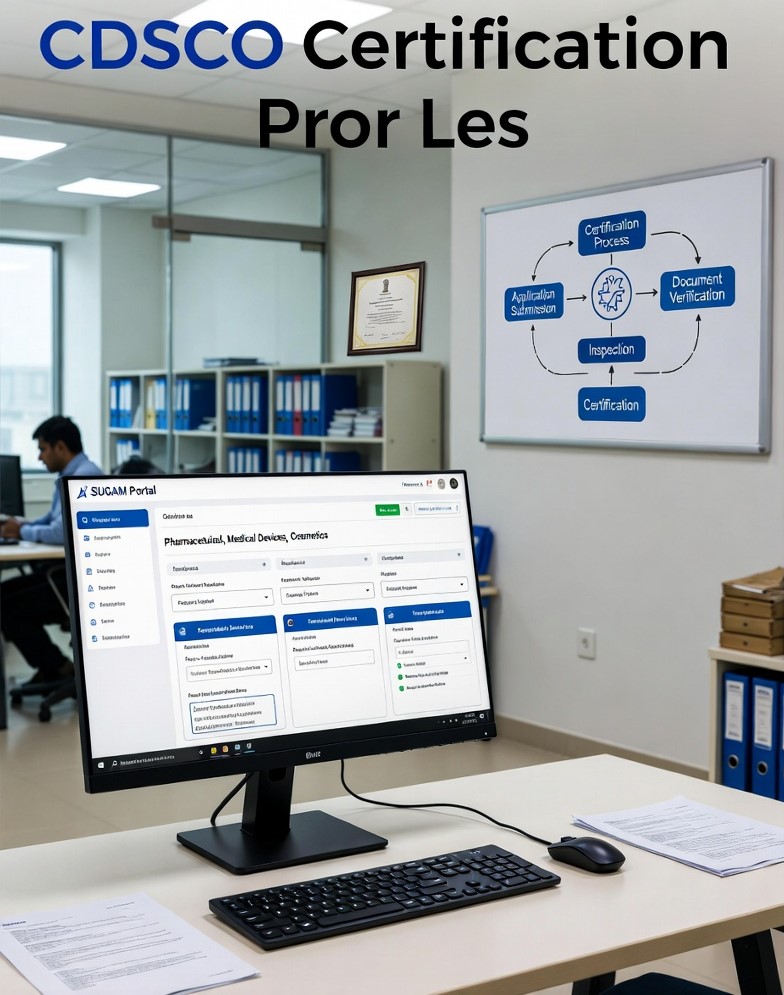
CDSCO Certification is the national regulatory clearance required to manufacture, import, or sell medical devices, drugs, or cosmetics in India. It's issued by the Central Drugs Standard Control Organization, under the Ministry of Health & Family Welfare, and it exists as the gatekeeper between a product and the Indian healthcare market — without it, these products simply can't be legally sold here, regardless of approvals held in other countries.
What makes CDSCO different from most other certifications on this site is that the process genuinely depends on what you're registering. A Class A medical device (low risk, like a tongue depressor) goes through a very different process than a Class D device (high risk, like an implant) or a new drug. Getting the classification right at the start is where most of the actual complexity lives.
Which Products Need CDSCO Registration
Three broad categories fall under CDSCO: medical devices (classified A through D by risk level under the Medical Device Rules), drugs and pharmaceuticals (new drugs, generics, and imported formulations), and cosmetics (manufactured or imported for sale in India). Each category has its own licensing pathway, documentation set, and regulatory timeline — a device license application and a drug import license are genuinely different processes, not variations of the same form.
Eligibility — Who Can Apply
Manufacturers with a facility in India, and importers bringing devices, drugs, or cosmetics from overseas, can both apply — though the pathway differs. Indian manufacturers typically apply through the state licensing authority for lower-risk categories and CDSCO centrally for higher-risk ones; importers need an Indian authorised agent and typically route applications centrally through CDSCO regardless of device class, since import licensing sits with the central authority.
CDSCO Registration Process — Step by Step
1. Determine the correct classification
We confirm whether your product is a drug, a medical device (and which risk class, A to D), or a cosmetic — this single decision determines almost everything else about the application.
2. Identify the licensing authority
Depending on classification and risk class, the application goes to either the state licensing authority or CDSCO centrally — getting this wrong means re-filing.
3. Prepare technical and regulatory documentation
This includes the Device Master File or Plant Master File for devices, or equivalent drug/cosmetic documentation, covering manufacturing process, quality systems, and safety data.
4. Compile clinical or safety evidence where required
Higher-risk devices and new drugs typically need clinical trial data or safety study evidence; lower-risk products may only need existing test reports and quality certifications.
5. Submit through the SUGAM online portal
CDSCO applications are filed through the SUGAM portal, along with supporting documents and the prescribed fee.
6. Respond to CDSCO queries
It's common to get clarification requests during review — missing documentation, a question on manufacturing process, or a request for additional test data — and timely responses matter for keeping the timeline on track.
7. Licence or registration grant
Once CDSCO is satisfied, the manufacturing licence, import licence, or registration certificate is issued for that specific product.
8. Post-approval compliance
Ongoing pharmacovigilance or adverse-event reporting obligations (for drugs and higher-risk devices) continue after approval — CDSCO clearance isn't a one-time event for these categories.
Documents Required
- Device Master File (DMF) or Plant Master File (PMF) for medical devices.
- Clinical trial data (Phase I, II, III), where applicable to the product's risk class.
- Free Sale Certificate, relevant for export and sometimes required to support import applications.
- Manufacturing or wholesale licence issued by the state authority.
- Certificate of Pharmaceutical Product (COPP) for exports.
- ISO or GMP certification demonstrating quality management compliance.
- Label artwork, ingredient lists, and usage instructions.
- Ethics Committee approval, for clinical studies involving human participants.
Why Classification Is the Hardest Part
Most delays we see trace back to classification, not paperwork. The same general type of product can fall into different risk classes depending on its intended use, invasiveness, or duration of body contact — a Class B device misclassified as Class A means the application was built on the wrong evidentiary standard and needs rework once CDSCO flags it. Getting an experienced read on classification before documentation starts saves far more time than it costs.
How Long Does CDSCO Approval Take?
This varies more than almost any other certification on this site, because it's genuinely risk-tiered by design. Lower-risk (Class A/B) medical device registrations can take 3 to 6 months; higher-risk (Class C/D) devices and new drug approvals, especially those requiring clinical data, can take 9 to 18 months or longer. Cosmetics registration is typically faster, often 2 to 4 months. We give a realistic estimate once classification is confirmed, since quoting one number across such different pathways would be misleading.
Cost Factors
Cost is driven by the licensing category and risk class (government fees scale with device class and licence type), the volume and complexity of clinical or safety data required, and consulting/documentation support needed to prepare a Device or Plant Master File from scratch if one doesn't already exist. Import licences also carry different fee structures than domestic manufacturing licences.
Common Mistakes That Cause Delays
The patterns we see most: misclassifying a device's risk category, which forces a rebuild of the application once caught; assuming a Free Sale Certificate from another country substitutes for Indian regulatory evidence (it doesn't, on its own); underestimating how long clinical evidence compilation takes for higher-risk products; and treating CDSCO approval as a finish line rather than the start of ongoing compliance obligations like adverse-event reporting.
Benefits of CDSCO Registration
Beyond legal market access, a valid CDSCO registration is what institutional buyers — hospitals, government procurement, distributors — check for before they'll even evaluate a product, since it's their own regulatory exposure on the line too. It also meaningfully speeds up customs clearance on every shipment for imported products, and it reduces the risk of a costly product recall or market withdrawal later, which is a far more expensive problem than getting classification right at the outset.
Frequently Asked Questions
How long does CDSCO registration take?
It varies significantly by risk class: lower-risk medical devices can take 3 to 6 months, higher-risk devices and new drugs with clinical data requirements can take 9 to 18 months or more, and cosmetics registration is typically faster at 2 to 4 months.
How are medical devices classified under CDSCO?
Devices are classified A through D by risk level under the Medical Device Rules, with Class A being lowest risk and Class D highest. The classification determines which licensing authority handles the application and what evidence is required.
Do I need clinical trial data for CDSCO approval?
It depends on the product's risk class. Higher-risk medical devices and new drugs typically require clinical trial data (Phase I, II, III), while lower-risk products may only need existing test reports and quality certifications.
What is the SUGAM portal?
SUGAM is CDSCO's official online portal where applications for medical device registration, drug licensing, and cosmetic registration are submitted along with supporting documentation.
Who applies to the state authority versus CDSCO centrally?
Indian manufacturers typically apply through the state licensing authority for lower-risk categories and centrally through CDSCO for higher-risk ones. Importers generally route applications centrally through CDSCO regardless of device class.
What happens after CDSCO approval is granted?
For drugs and higher-risk devices, ongoing pharmacovigilance or adverse-event reporting obligations continue after approval — CDSCO clearance is not a one-time event for these categories.